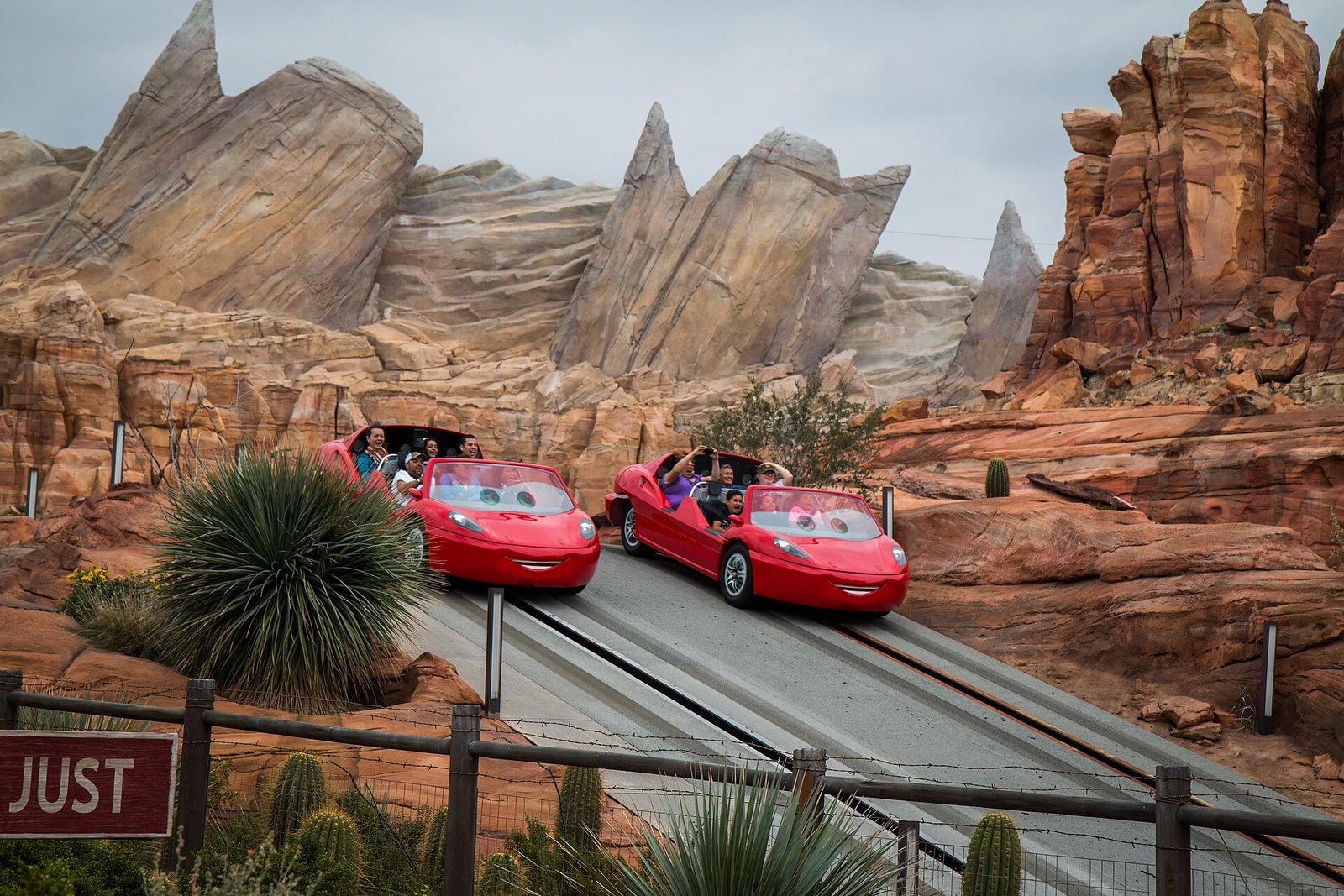
Radiator Springs Racers in Cars Land (Disney California Adventure). Photo: HarshLight, CC BY 2.0, via Wikimedia Commons (resized).
What does a major attraction cost to build? It depends on what goes into the figure: vehicles and track, the building, the scenery, an entire themed land or a whole resort. Here are ten cases that show the difference, with the amount and its source where there is one. For us, the takeaway is clear: there is no official ranking of the most expensive attractions, and the lists that promise one usually lump very different things together.
The USD 700 million doing the rounds for Rise of the Resistance has no solid backing, and Cosmic Rewind's USD 500 million is a consultant's estimate. Hagrid, Expedition Everest and Uncharted, on the other hand, have figures published in the press. The list follows an editorial order, not highest to lowest spend.
If speed interests you as much as budget, take a look at our ranking of the fastest roller coasters in the world.
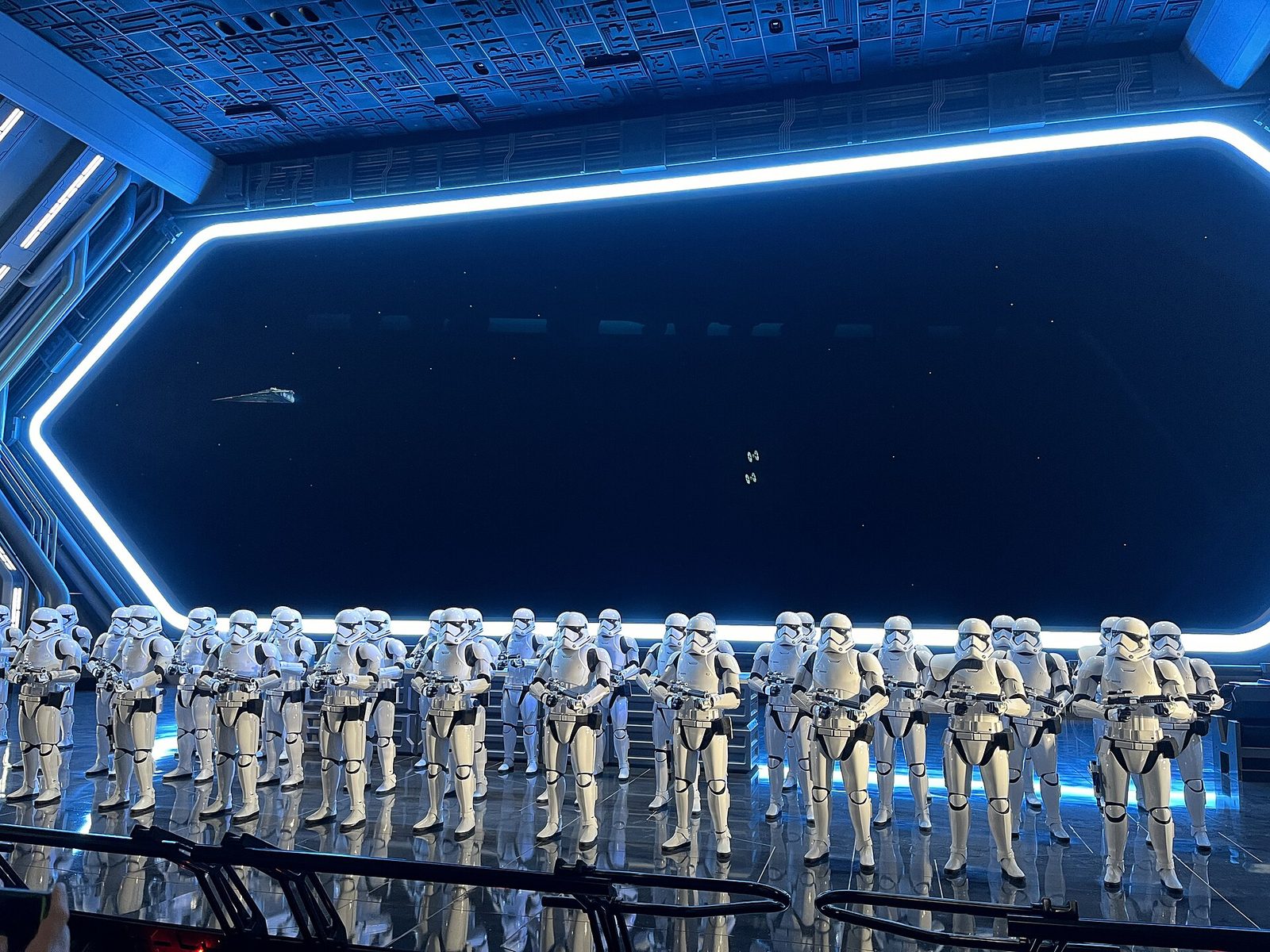
1. Star Wars: Rise of the Resistance 🇺🇸
Parks: Disney's Hollywood Studios and Disneyland
Development: Walt Disney Imagineering
Technology: vehicles without a visible rail, motion simulation and a drop
Opening: December 2019 in Florida and January 2020 in California.
Rise of the Resistance is an adventure in several stages: the Resistance base, a captured transport and an escape through a Star Destroyer. The escape vehicle runs without a visible rail, in sync with sets, animated figures and motion effects. What we like most is how it links one scene to the next: that is where its real achievement lies, more than in any single machine.
And the USD 650–700 million for Florida and USD 400 million for California? We have not found a solid source to back them. Nor does it make sense to pin the whole Galaxy's Edge investment on it: the land also has another attraction, restaurants, shops and infrastructure. So we have dropped the supposed record and kept what is clear: the ride itself.
2. Guardians of the Galaxy: Cosmic Rewind — estimated USD 500 million 🇺🇸
Park: EPCOT, Walt Disney World
Development: Walt Disney Imagineering / Vekoma
Technology: indoor coaster with a backwards launch and controlled vehicle rotation
Length: approximately 1,700 m
Speed: up to about 97 km/h (60 mph)
Opening: 27 May 2022.
Cosmic Rewind turned Universe of Energy into Wonders of Xandar and rotates riders so they face the action, with screens and music. The USD 500 million is an estimate by consultant Dennis Speigel, reported by Bloomberg in an article of 5 May 2022 published by Gulf News. Disney declined to comment on the cost, so take it for what it is: an estimate, not an official budget.
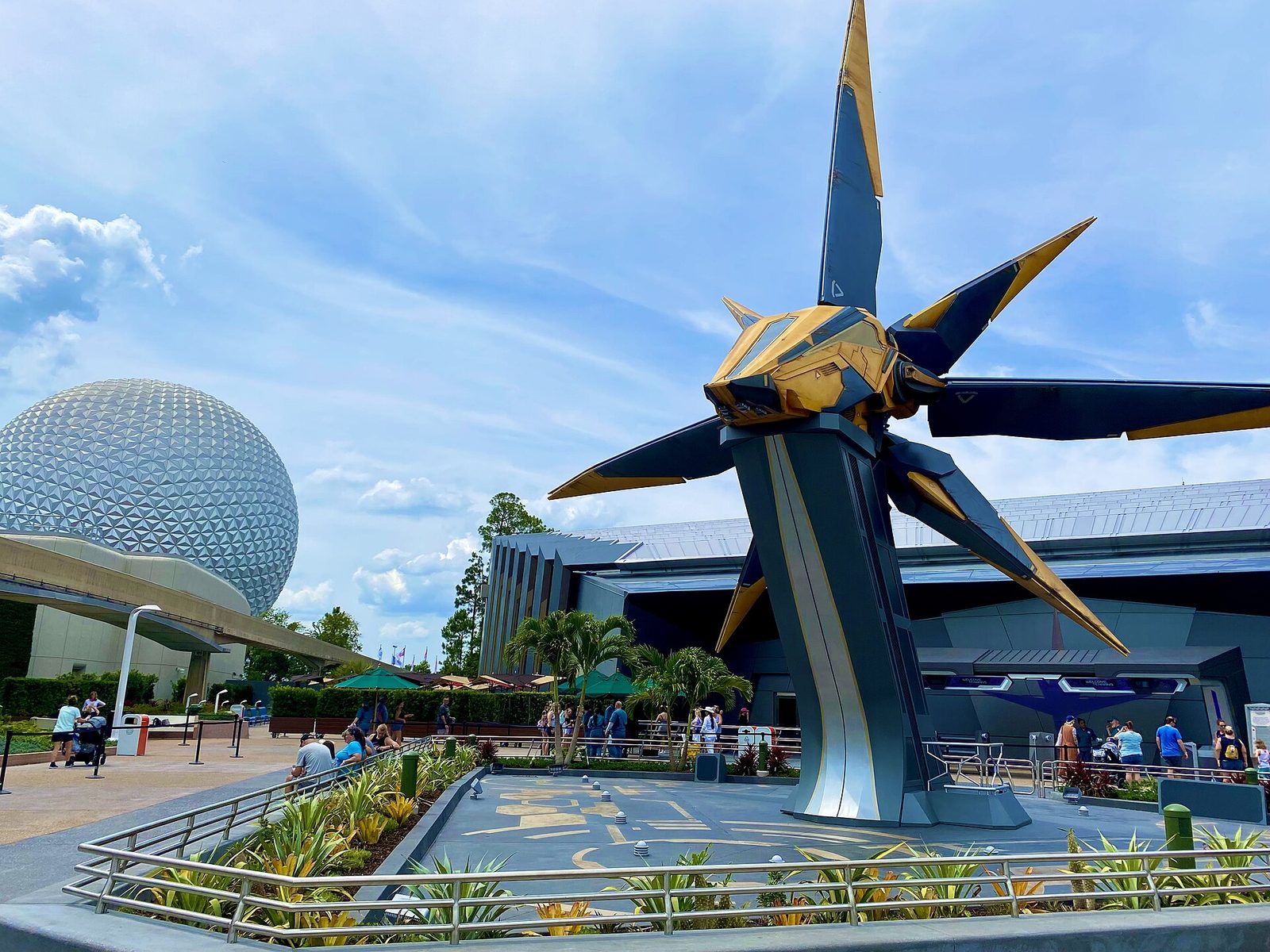
The vehicles do not spin wildly like on a spinning coaster: the system decides where you look at every moment. The backwards launch and the music completely change how you feel the speed. In our view, it is the best example of technology serving the story: building, projections, track and programming work as one, which is why you cannot work out the bill from the length of the ride.
3. Radiator Springs Racers 🇺🇸
Park: Disney California Adventure, Anaheim
Development: Walt Disney Imagineering
Technology: guided vehicles, indoor scenes and an outdoor parallel race
Opening: 15 June 2012.
Cars Land's centrepiece alternates a drive through Radiator Springs with a race between two cars. The animated characters and the rocky landscape give the fast section its meaning. The USD 200 million repeated by so many lists is not an official figure for this attraction, so we do not accept it.
The cars follow a guided route: you do not steer. Before the race you pass scenes with Cars characters, and the preparation changes depending on the route you get. The classic mistake is to pin all of the Cars Land or California Adventure redevelopment investment on Racers, when it covers much more.
4. Harry Potter and the Forbidden Journey 🇺🇸
Park: Universal Islands of Adventure, Florida
Development: Universal Creative, using KUKA robotic-arm technology
Technology: passenger benches on robotic arms travelling along a track
Opening: 18 June 2010.
Hogwarts Castle holds a themed queue and a ride that mixes physical sets with projected imagery. The benches are mounted on robotic arms that move along a track, so it is not a trackless system. That combination lets the ride turn you and move you in front of each scene from the world of Harry Potter.
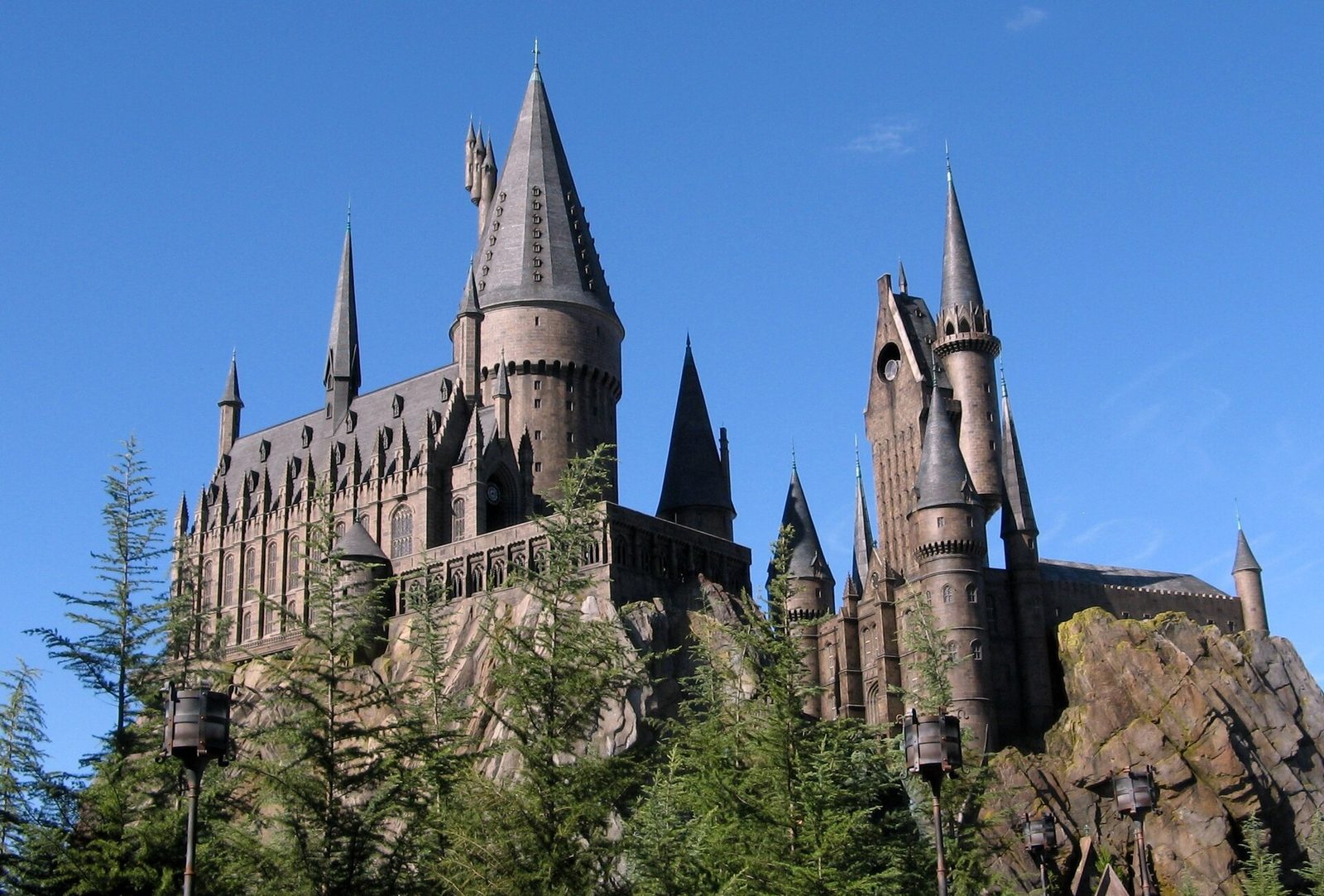
The USD 200 million attributed to it has no source that separates it from everything else: the castle, the ride and the Hogsmeade area are different scopes. What is genuinely impressive is the engineering: the arm moves the bench while its base travels along the track, in sync with physical effects and video sequences.
5. Transformers: The Ride 3D
Installations: Universal Studios Singapore, Hollywood, Florida and Beijing
Development: Universal Creative
Technology: vehicles following a physical route with motion platforms and 3D projection
First opening: Singapore, December 2011.
Transformers mixes real vehicle movement with 3D scenes of the battle between Autobots and Decepticons. There are versions in several resorts, but that does not justify assigning USD 100 million to each or adding up USD 400 million in total: construction, buildings and local costs vary from one site to another.
The platform moves riders while the imagery extends the scene beyond the physical sets. That is how it creates drops and crashes the vehicle never actually makes. It is the direct heir to the language of Spider-Man, next on the list; assuming they share a bill is another matter.
6. The Amazing Adventures of Spider-Man 🇺🇸
Park: Universal Islands of Adventure, Florida
Development: Universal Creative
Technology: SCOOP vehicle with synchronised movement, sets and 3D projection
Opening: 28 May 1999.
When it opened in 1999, Spider-Man led the way by bringing together physical sets, moving vehicles and 3D projection. Its place in theme park history does not need the USD 100 million attributed to it without a clear source, nor the title of “first of its kind”.
SCOOP vehicles travel through real sets synchronised with the projected action, and you feel turns, impacts and a big drop as part of the story. It was upgraded with 4K projection in 2012: do not mix up the cost of that refurbishment with the original construction.
7. Hagrid's Magical Creatures Motorbike Adventure — reported USD 300 million 🇺🇸
Park: Universal Islands of Adventure, Florida
Manufacturer: Intamin, with Universal Creative
Technology: seven-launch coaster, motorbike and sidecar seats, and a vertical-drop section
Opening: 13 June 2019.
On 13 June 2019, CNBC reported a USD 300 million investment in Hagrid. That is a media figure, not an official budget itemised by Universal. And the report also counts the setting and theming, alongside the seven launches and a vertical drop of about five metres.
The ride alternates acceleration, forest and creature encounters, and the motorbike or sidecar changes how the trip feels. CNBC highlights Fluffy, the three-headed dog, and the more than 1,200 trees planted. For us, Hagrid is the best example that an attraction with a story costs far more than the steel of its track.
8. Avatar Flight of Passage (Pandora) 🇺🇸
Park: Disney's Animal Kingdom
Development: Walt Disney Imagineering
Technology: 3D flight simulator with individual seats, immersive imagery and environmental effects
Opening: 27 May 2017.
Flight of Passage puts you on the back of a banshee with 3D imagery, seat movement and effects such as wind and water. It is not a roller coaster: there is no track. We have dropped the USD 200 million once attributed to it because nobody has separated it from the rest of Pandora, which also includes Na'vi River Journey, the landscaping, the restaurants and the infrastructure.
The individual seat and synchronised imagery make you feel every climb and dive of the flight. Our advice: pay attention to the sensory effects, which are what set it apart from a simple projection. And there is no need to embellish it with screen widths, suppliers or internal mechanisms that nobody has documented.
9. Expedition Everest — reported USD 100 million 🇺🇸
Park: Disney's Animal Kingdom
Manufacturer: Vekoma / Walt Disney Imagineering
Technology: coaster with track switches and a backwards section
Length: about 1,184 m; track height is around 34 m, unlike the artificial mountain's height
Opening: April 2006.
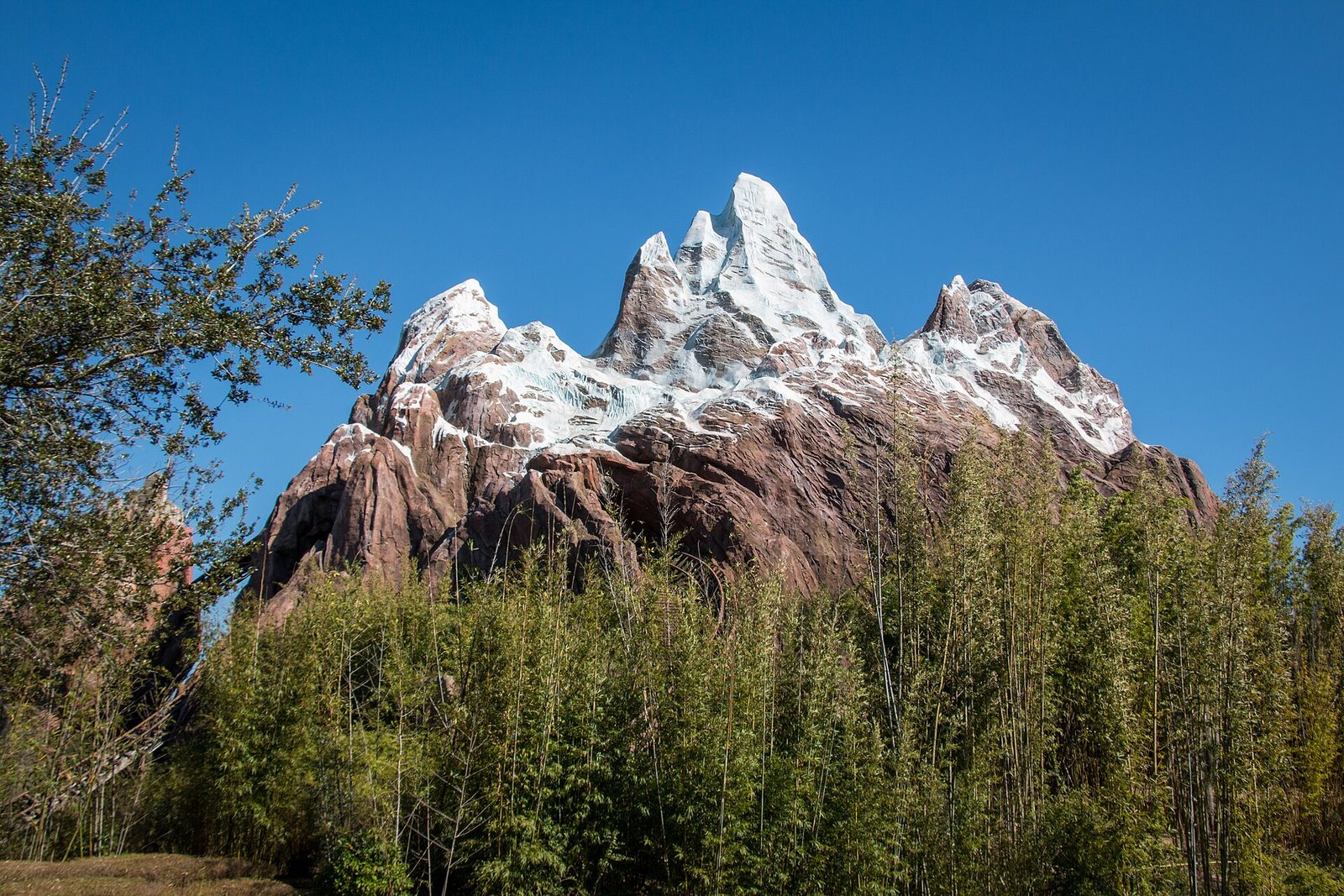
CNBC cites USD 100 million for Expedition Everest in its 2019 report, and RCDB gives the same amount. It is a published historical cost, not a current record. Watch the height: the track reaches about 34 metres, but the artificial mountain is close to 61. Mixing them up inflates the scale of the project.
Track switches let the train stop at a section that looks broken and send it backwards into the dark. The Yeti and the mountain are the heart of the show. As for why it works the way it does, or what it would cost to fix, there is no serious documentation, so we would rather not speculate.
10. Uncharted: The Enigma of Penitence — published EUR 25 million 🇪🇸
Park: PortAventura Park, Far West
Development: Intamin and Sally Dark Rides
Technology: indoor coaster with five LSM launches, including a sideways launch
Public opening: 17 June 2023.
Variety announced an investment of EUR 25 million in November 2022, and Catalan News repeated the figure at the June 2023 opening. That is what has been published for the Uncharted project: not EUR 30 million, and not a proven Spanish record. And it has nothing to do with PortAventura World's total investment.
According to Intamin, it has five LSM launches, one of them sideways, a sideways drop and twelve-seat vehicles with controlled spinning, on almost 700 metres of track. It is based on the Uncharted film, which in turn draws on the video games. It is our European pick from the list: scenes, projections and motion well combined, with no need to inflate its budget.
Comparison table: ten projects and what their figures cover
| Table order | Attraction | Amount and documented scope | park |
|---|---|---|---|
| 1 | Rise of the Resistance | No reliable standalone cost; Galaxy's Edge is a different figure | Disney's Hollywood Studios 🇺🇸 |
| 2 | Guardians: Cosmic Rewind | USD 500 million: Dennis Speigel estimate, Bloomberg (2022) | Epcot, Disney World 🇺🇸 |
| 3 | Hagrid's Motorbike Adventure | USD 300 million: Hagrid project, CNBC (2019) | Universal Islands of Adventure 🇺🇸 |
| 4 | Radiator Springs Racers | No reliable Racers / Cars Land breakdown | Disney California Adventure 🇺🇸 |
| 5 | Forbidden Journey | Figure mixed up with all of Hogsmeade | Universal Islands of Adventure 🇺🇸 |
| 6 | Flight of Passage | No cost separate from Pandora as a whole | Disney's Animal Kingdom 🇺🇸 |
| 7 | Transformers The Ride 3D | No reliable cost per installation | Universal (4 parks) |
| 8 | Spider-Man (Amazing Adventures) | No reliably sourced original budget | Universal Islands of Adventure 🇺🇸 |
| 9 | Expedition Everest | Historical USD 100 million: CNBC / RCDB | Disney's Animal Kingdom 🇺🇸 |
| 10 | Uncharted (Penitence) | EUR 25 million: Variety (2022), Catalan News (2023) | PortAventura World 🇪🇸 |
The table follows presentation order, which differs from the sections, and does not rank costs. Figures are from their own year, not adjusted for inflation to 2026. An announced investment, a press estimate and an audited final bill do not carry the same weight, so we do not add up incomplete amounts or amounts with different scopes.
Why do they cost so much?
The cost of a modern attraction is split into four large blocks:
1. Research and design: the story, the engineering, prototypes and motion-system testing. Cosmic Rewind's controlled rotation and Rise's system changes mean coordinating many disciplines. Be wary of anyone who gives a fixed percentage for this block: without the project accounts, nobody knows.
2. Construction and services: buildings, foundations, structures, track, electricity and safety systems. Everest's mountain, for example, is much taller than its track. And when an attraction shares infrastructure with its themed land, working out its share gets complicated.
3. Ride systems: vehicles, motors, sensors, controls, projection and effect synchronisation. A Forbidden Journey robotic arm and a guided Racers car are very different cost items. There is no million-dollar rate per animated figure or fixed number of computers, however often you read it.
4. Theming: sets, sculpture, vegetation, lighting, sound and costumes. This is where the big difference lies: Hagrid's forest explains why an attraction with a story costs far more than the machine alone. Because it all overlaps with design and construction, adding up percentages by block ends up counting the same work twice.
The next major project: Universal United Kingdom Resort
Universal is developing a resort in Bedfordshire with a theme park, a 500-room hotel, and shopping and dining areas. Its official website talks about nearly GBP 50 billion in projected economic benefit, which is not the same as what it will cost to build. The USD 200–500 million per attraction doing the rounds is pure speculation for now, and we are not putting it on any list.
Frequently asked questions
There is no official record to settle it. Rise of the Resistance is technically very complex, but the USD 700 million doing the rounds has no solid backing. What does exist are published figures, such as CNBC's USD 300 million for Hagrid: they work as a reference, not as a world record.
There is no official record. In 2022 Bloomberg published Dennis Speigel’s estimate: USD 500 million for Cosmic Rewind, unconfirmed by Disney. CNBC reported USD 300 million for Hagrid and cited USD 100 million for Everest in 2019. To compare them properly, you would need to match what each figure includes, the year and inflation.
Because, on top of the motion system, you pay for buildings, scenery, audiovisual development, integration and testing. Cosmic Rewind's rotating vehicles and Flight of Passage's synchronised effects are very different jobs. And not every attraction invents its technology from scratch, nor do all animated figures cost the same.
There is no official record in Spain. PortAventura's Uncharted is the best-documented example: EUR 25 million of published investment, according to Variety and Catalan News. It opened to the public on 17 June 2023 and combines five LSM launches with indoor scenes and controlled rotation.
You cannot say so without a reliable cost for Rise and an equivalent basis for the film. Production, marketing, buildings and infrastructure are different items. Comparing an attraction estimate with a film budget without spelling them out makes for a striking headline, but not a conclusion.
For you as a visitor, the value lies in the experience and whether it suits your tastes, not in the announced figure. For the park, what counts is extra attendance, visitor spending, maintenance and how many years the attraction will run. Without accounts that separate all of that, nobody can guarantee an attraction pays for itself within a few years.