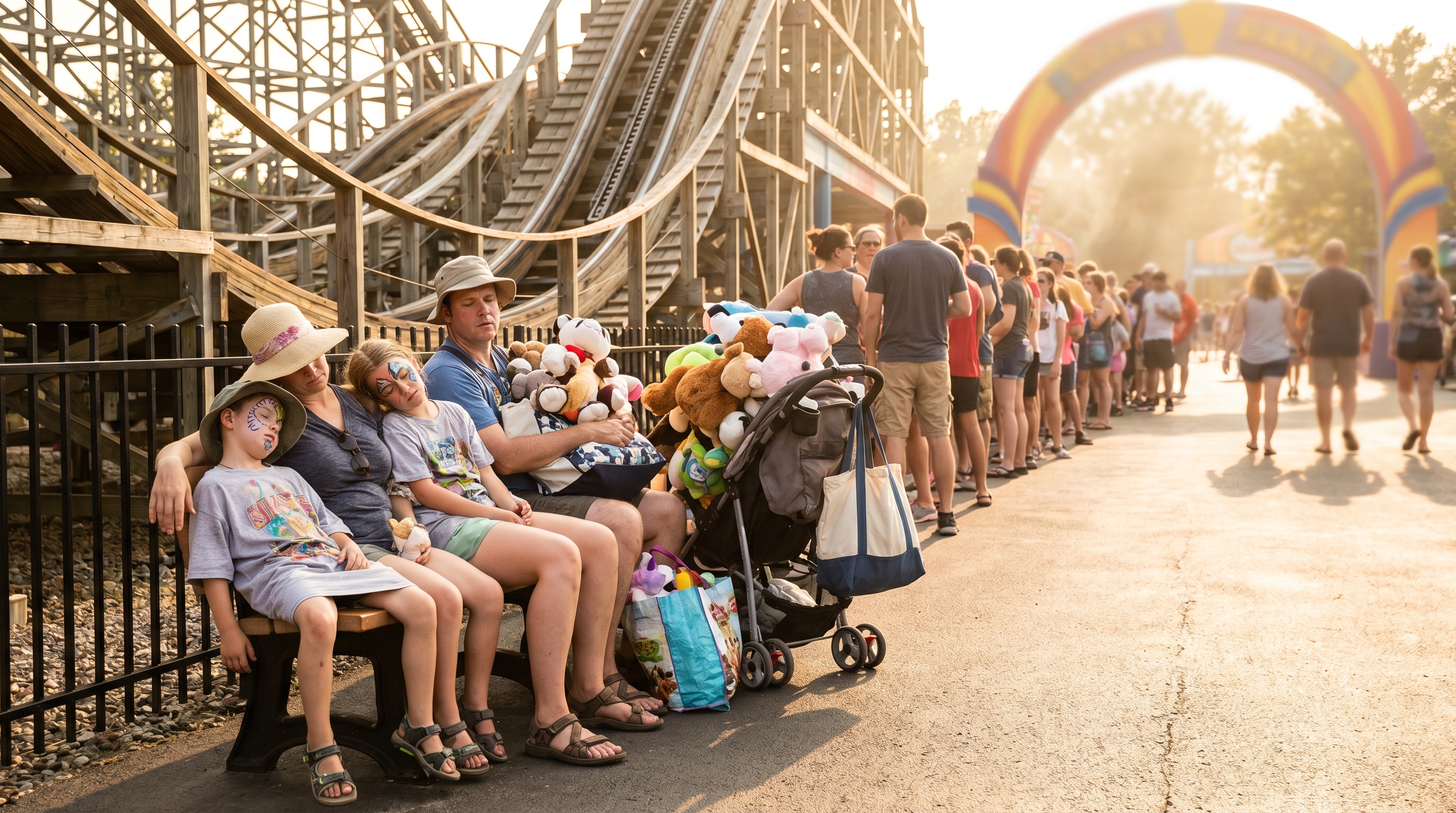
There's something universal about theme parks: it doesn't matter if it's PortAventura, Disney World or Universal Studios — you always see people making the same mistakes. People queuing for 90 minutes under the sun, paying double for tickets, eating at two in the afternoon with everyone, or carrying backpacks that weigh more than a small child.
We have all committed them. And after visiting dozens of theme parks on several continents, we have learned (the hard way) which mistakes really ruin your day. This guide collects the15 most common mistakes, with concrete solutions that you can apply today.
🎟️ Are you looking for park tickets?We compare the best prices and offers available today.
See ticket offers on GetYourGuide →If you only take away one idea from this article:Most mistakes are solved by planning 30 minutes before going. That's all.
1. Buy tickets at the box office
The error:You get to the park, you see the ticket line and you think "well, it'll be 10 minutes." Forty minutes later, you're paying full price without a discount, while people who bought online are already riding the first attraction.
Why it matters:Theme parks penalize box office purchases in two ways: higher price and wasted time. At Disney World, the difference can be $20-$30 per ticket. At PortAventura, you save up to €20 by purchasing online in advance. In addition, many parks offer exclusive online promotions: free second half of the day, discounts for early purchases, or combos with food included that you will never find at the window.
The solution:Always buy online, at least 2-3 days in advance. Compare prices on the park's official website and on platforms such asGetYourGuide, which sometimes have lower prices than the box office itself. If you are visiting more than one park in the same group (for example, two Universal parks or two Six Flags), look at multi-park passes: they are almost always more cost-effective.
2. Not arriving at opening time
The error:"The park opens at 10:00, but if I arrive at 11:30 there is still plenty of time." Fake. The first two hours of a theme park are pure gold.
Why it matters:The first 60-120 minutes after opening are the busiest time of the day. Queues for star attractions can be 15-20 minutes compared to 90-120 minutes in the mid-afternoon. Also, many families with children take a long time to arrive (preparing children = +45 unexpected minutes), so the park really fills up from 11:30-12:00. Arriving at opening time gives you a huge advantage.
The solution:Arrive 15-20 minutes before the official opening. Many parks open their gates earlier than the advertised time (they call it a "rope drop" in Orlando). Be clear about the 2-3 attractions you want to do first and go straight to them. The first 30 minutes can be 3 hours late in terms of what you get done.
3. Go to the most popular attraction first
The error:Everyone has read "arrive early," so everyone goes straight to the most popular attraction. Result: a massive queue at 10:05 on the main coaster.
Why it matters:It's a rebound effect. If everyone thinks the same, the star attraction becomes saturated within the first hour. In parks like Universal Studios, the Harry Potter attractions or Super Nintendo World, lines accumulate 60+ minutes from the first minute because literally all the visitors go there first.
The solution:Start with the second or third most popular attraction. Or better yet: go to the star attraction that isfurther from the entrance. Most people stop at the first attractions they come across. If you walk to the back of the park, you'll probably find the main attraction almost empty at 10:15. At Disney's Hollywood Studios, for example, going to Slinky Dog Dash first (near the entrance) means 45 minutes in line; walking to Tower of Terror (in the background) can mean 10 minutes or less.
4. Do not carry an external battery
The error:You go out with your mobile at 85% and you think that is enough. At 3pm, your battery is at 12%, the park map no longer works, you can't take photos, and you've lost access to the digital tickets.
Why it matters:On a day at the theme park you use your phone for everything: GPS maps, waiting times, digital tickets, photos, videos, contactless payments, virtual fast pass... The battery drains much faster than normal. Between maximum screen brightness (sun), constant GPS, and thousands of photos, it's easy to go from 100% to 0% in 4-5 hours. And power outlets in the parks are practically non-existent.
The solution:It has an external battery of at least 10,000 mAh. It fits in any pocket and gives you 2-3 full charges. It is, without exaggeration, the most important accessory you can bring to a theme park in 2026.
5. Eat at 2:00 p.m. (peak time)
The error:You get hungry at mealtime, like everyone else. Result: 30-45 minute queues at each restaurant, busy tables, stressed staff and food served in a hurry.
Why it matters:The period from 1:00 p.m. to 2:30 p.m. is the time of maximum saturation in the restoration of the park. Each restaurant has twice as many people, waiting times skyrocket and the experience is quite unpleasant. Plus, you're wasting an hour or so of park time in a food line when you could be riding attractions with short lines (because everyone is eating).
The solution:Eat early (11:30-12:00) or late (2:30-3:00 p.m.). In both cases, you will find practically empty restaurants, faster service and available tables. Our recommendation: eat at 11:30. It's a little early, but while everyone is lining up for food at 2:00 p.m., you'll be riding rides with minimal wait times. It's a trade that always wins.
6. Do not use the single rider line
The error:You go with a group and you think that you have to queue together for everything. So you spend 90 minutes in the normal line when there is a single rider line with a 10 minute wait.
Why it matters:Single rider lines are designed to fill empty seats on attractions where odd-numbered groups leave gaps. On attractions like Radiator Springs Racers (Disney California Adventure) or Velocicoaster (Universal Islands of Adventure), the difference can be 120 minutes (regular line) versus 15 minutes (single rider). It is a huge advantage.
The solution:If you don't mind not sitting next to your travel companion (remember that the attraction lasts 2-3 minutes), use single rider whenever available. You will meet again at the exit. In many cases, you even end up sitting together because there are two empty seats in a row. Parks that regularly offer single riders include Universal, Disney (selective), and Six Flags.
7. Do not download the park app
The error:"I'm not going to download another app for a day." And then you spend the day asking where everything is, how long the wait is, and what time the parade is.
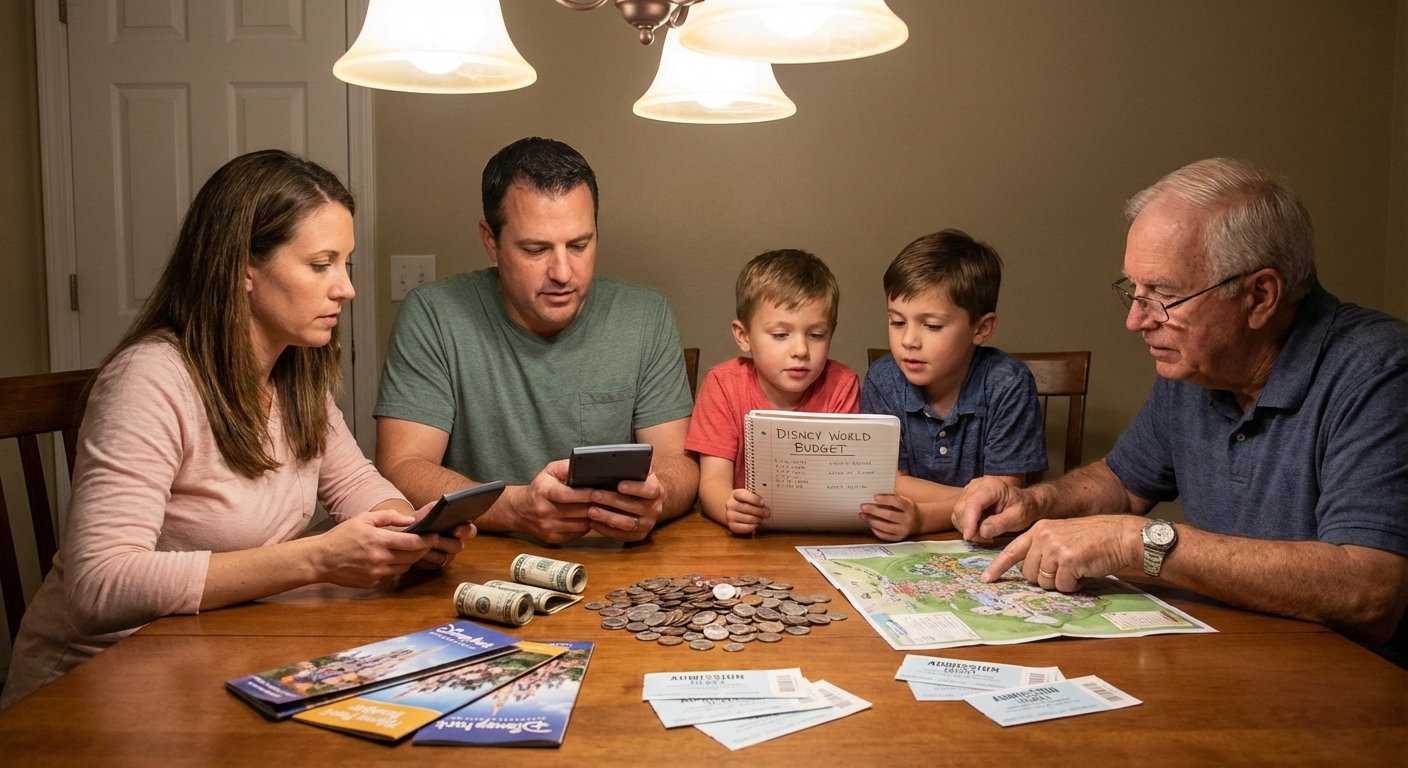
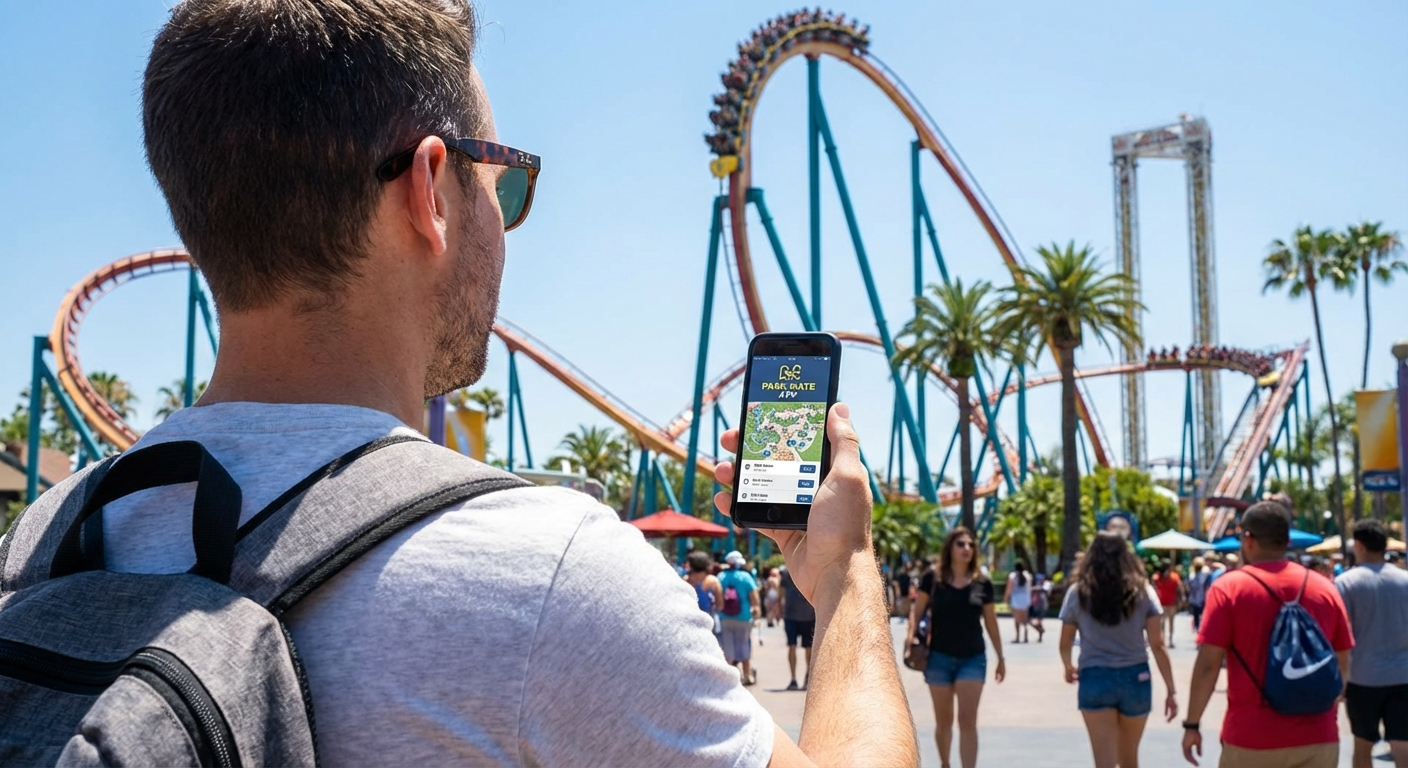
Why it matters:Official theme park apps in 2026 are essential tools. They include interactive GPS maps, real-time wait times, restaurant reservations, virtual queuing (at Disney and Universal), closed attraction notifications, and show times. Not using the app is like driving without GPS in a city you don't know: possible, but unnecessarily difficult.
The solution:Download the app before arriving at the park (with good WiFi, not with the park's data, which is usually slow). Set up your account, link your tickets, and get familiar with the map. In parks like Disney World, the app is literally mandatory to manage Lightning Lane and virtual queues. At Universal, it allows you to see wait times and order food without waiting in line.
8. Carry a huge backpack
The error:"Better to bring everything just in case." And you end up carrying an 8 kilo backpack with things you don't need, in addition to paying for the lockers at the attractions.
Why it matters:Large backpacks are a triple problem. First, they physically burden you after 8 hours of walking. Second, on many attractions (especially roller coasters) you can't bring backpacks and you have to rent a locker — which costs between $2 and $5 per use. Third, you slow down your group every time the backpack has to be put away/picked up. If you go with children, you already have enough luggage with theirs.
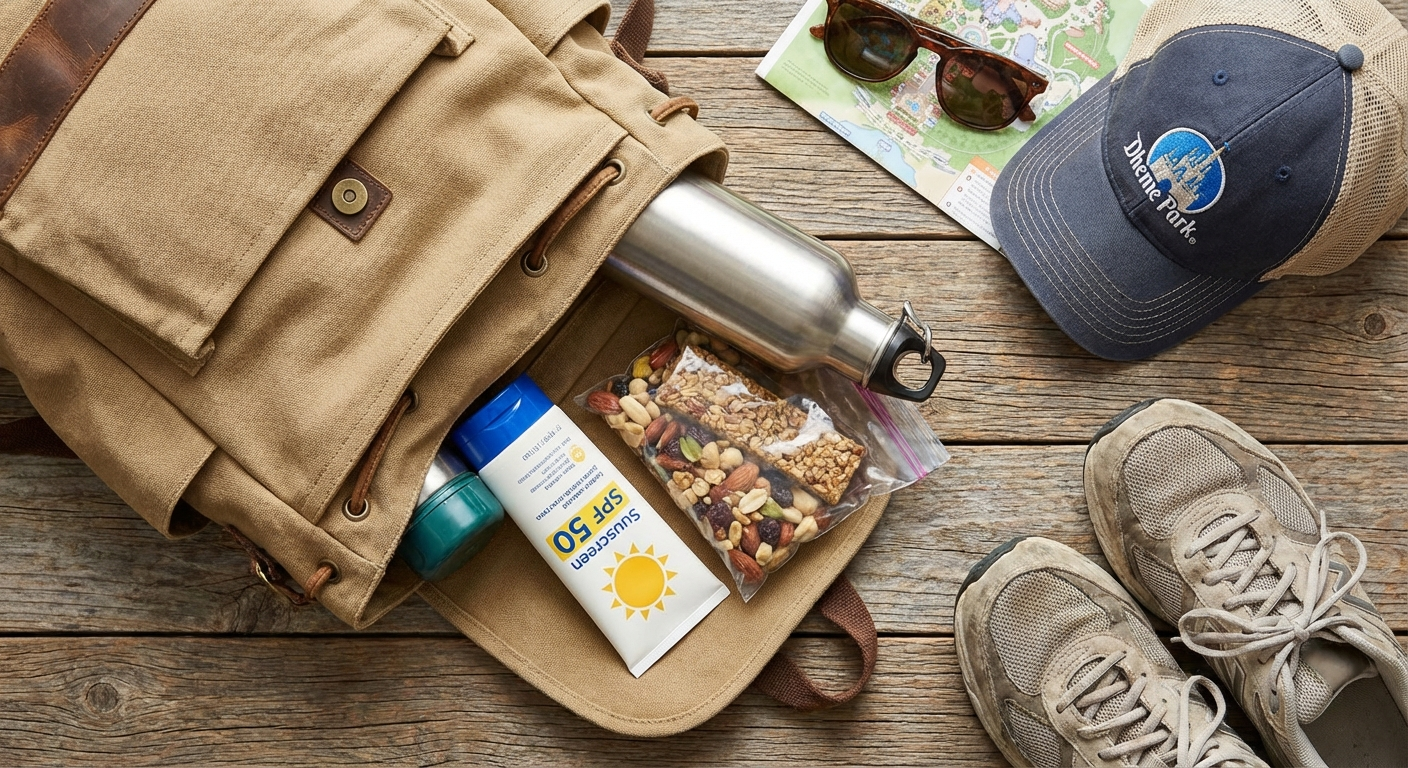
The solution:Carry only the essentials in a small backpack or fanny pack: power bank, sunscreen, water bottle, phone, and some cash. Additionally, fanny packs are usually allowed at attractions where backpacks are not, saving you locker costs.
9. Not checking the weather or wearing a raincoat
The error:It's sunny when you leave the hotel, so you don't check the forecast. Two hours later, a summer storm leaves you soaked and forces you to take shelter for 45 minutes under an awning.
Why it matters:In areas like Florida, afternoon showers are as predictable as lines at Space Mountain. In Europe, the weather can change radically in a coastal park like PortAventura or Disneyland Paris. Rain doesn't just get you wet: many outdoor attractions close for safety, and when they reopen, everyone runs at once creating saturation spikes. Being prepared for rain is not pessimism, it is strategy.
The solution:Check the weather forecast the night before. If there is more than a 40% chance of rain, bring a foldable raincoat (not an umbrella, which is uncomfortable on attractions and in the wind). The single-use raincoats sold in the parks cost €10-15; A quality folding one costs €8-€10 on Amazon and lasts for years.
10. Ignore the shows
The error:"I came to ride attractions, not to see plays." And you miss out on some of the park's best moments.
Why it matters:Theme park shows have reached an extraordinary level of production. The Fantasmic! Disney, Universal's WaterWorld or the nighttime fireworks shows are experiences that justify part of the ticket price. Plus, shows are the best strategy for rush hour: while everyone is queuing for attractions, you're sitting in an air-conditioned theater enjoying a first-class show.
The solution:Plan at least 1-2 shows in your day. The night shows (fireworks, projections) are a must: they are usually the most magical moment of the day. Daytime shows are ideal for the hottest or most crowded hours (1:00 p.m.-4:00 p.m.). Check the schedules in the park app first thing in the morning and plan your route around the shows you want to see.
11. Not planning routes between attractions
The error:You go from one attraction to another in no order, crossing the park from side to side several times. At the end of the day you have walked 20 kilometers and done half as many attractions as you could.
Why it matters:Theme parks are great. Disney's Animal Kingdom is 230 hectares. Universal Studios Florida has clearly differentiated areas. Walking without planning means extra miles, wasted time, and ruined legs at the end of the day. Physical fatigue is real and affects how you enjoy the last few hours in the park.
The solution:Before you go, look at the park map and identify the attractions you want. Group them into areas and take a logical route: start in the area furthest from the entrance and get closer. Minimize crossings from one side to the other. Most parks have downloadable maps in PDF or in their app. Ten minutes of planning saves you hours of unnecessary walking.
12. Spend money on water bottles
The error:You're thirsty, you buy a bottle of water in the park. It costs you €4-5. You get thirsty again, you buy another one. At the end of the day you have spent €15-20 on water alone.
Why it matters:On a summer day at a theme park you need to drink between 2 and 4 liters of water. At park prices (€3-6 per bottle), that's between €12 and €24 on water alone. It is one of the most avoidable and most recurring expenses of the day. And no, the solution is not not to drink: dehydration is the number one reason for dizziness and fainting in the parks.
The solution:Bring your own water bottle (preferably thermal, at least 750 ml). Almost all parks have drinking fountains where you can refill for free. At Disney World and Universal, any fast food restaurant will give you a free glass of tap water if you ask for it. If you carry a thermal bottle, the water stays cold all day. Investment: €10-15. Savings per visit: €15-20.
13. Go on peak dates without need
The error:You go at Easter, in August or on a long weekend because "that's when I have vacations." And you find yourself with 2-hour queues, inflated prices and a level of saturation that turns the experience into a test of endurance.
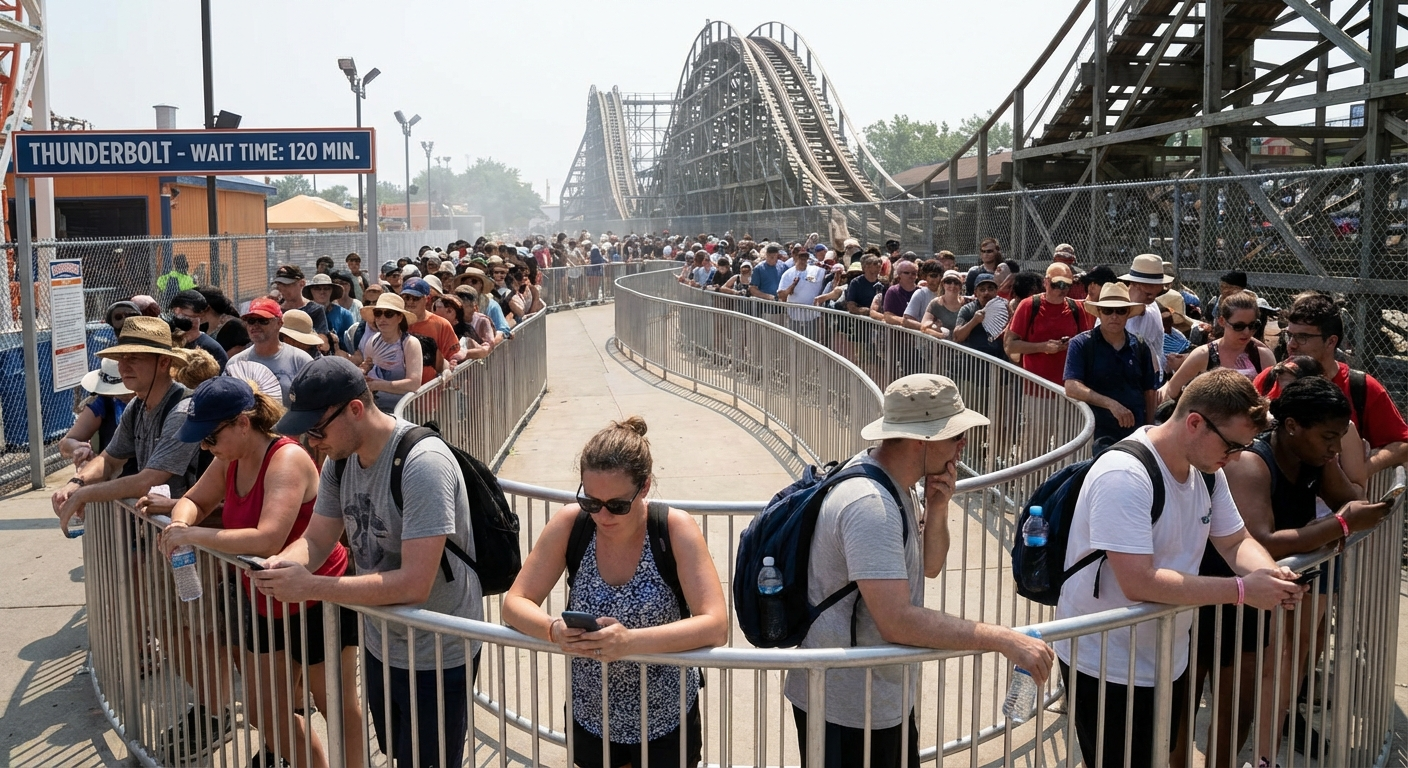
Why it matters:The difference between visiting a park on peak dates and low dates is abysmal. At PortAventura, a day in July can mean 90 minutes in Shambhala; on a Tuesday in October, 15 minutes. At Disney World, the difference is even more extreme. Dynamic ticket prices (like Disney's) can vary by $50-$70 between the cheapest and most expensive day of the month. Peak dates don't just cost more: they're worth less because you do a lot less.
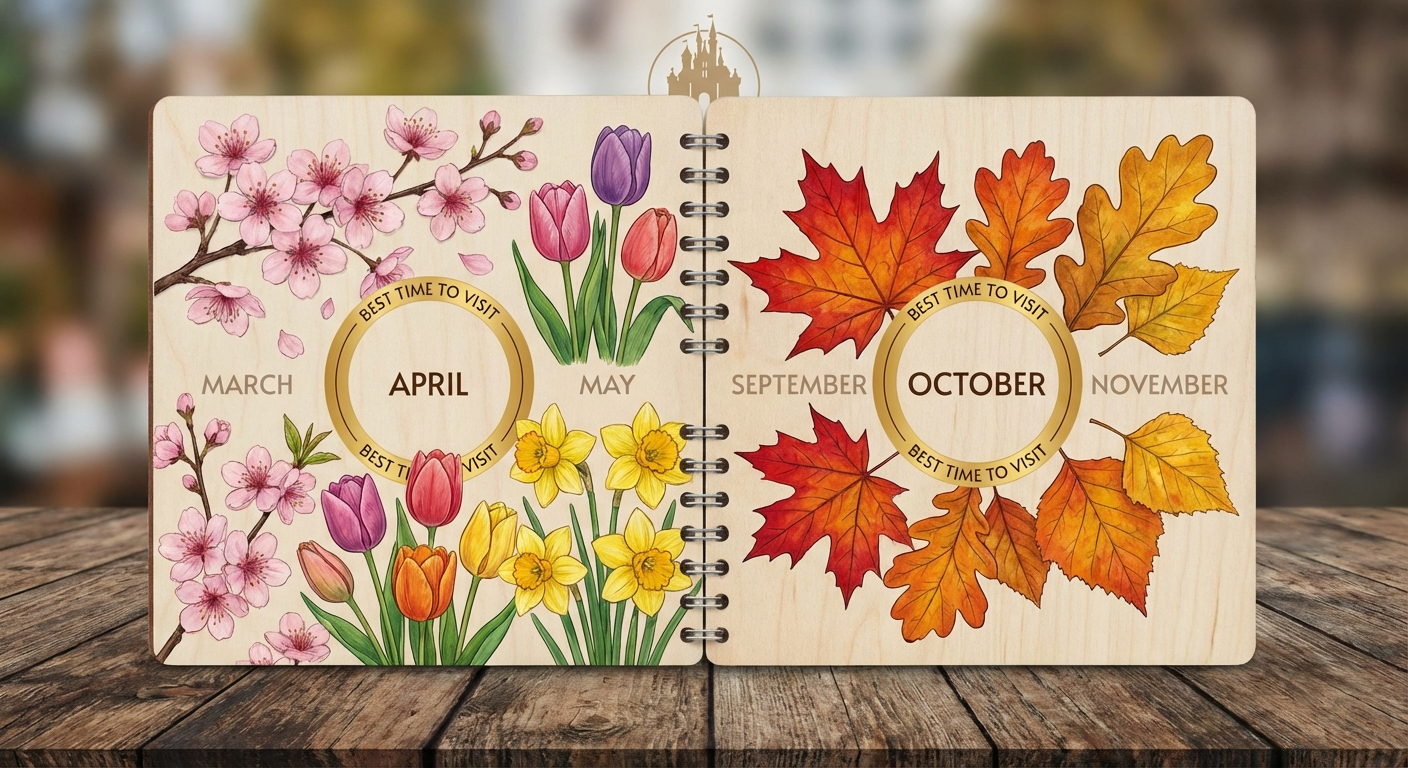
The solution:If you have flexibility, choose low or medium dates. September and October are generally the best months for almost any park in the northern hemisphere: the kids are back in school, the weather is pleasant, and the parks maintain full hours. For Spain, June and September are excellent months for PortAventura. For Orlando, September and late January/February are the quietest times. Use tools like Disney's pricing calendar or TouringPlans.com to estimate traffic.
14. Not knowing your limit (motion sickness)
The error:"Let's see, I'll try this attraction and see how it goes." And 30 seconds later you deeply regret it, with nausea that ruins the next 2-3 hours of your day.
Why it matters:Motion sickness is real and is not a matter of bravery. Motion simulators (like Mission: SPACE at Epcot or The Simpsons Ride at Universal), roller coasters with reverse twists, and teacup rides can cause intense nausea that lasts for hours. If you don't know your limit, you can ruin an entire day at the park because of a bad decision at 10:30 in the morning.
The solution:Know your limits before you go. If roller coasters make you dizzy, don't force yourself. Start with gentle attractions and gradually increase. Avoid doing several intense rides in a row (intersperse calm rides). If you know you get dizzy, take biodramine 30 minutes before the first strong attraction. And a golden trick: attractions that rotate (teacups, carousel) are the ones that make you the most dizzy, much more than linear roller coasters.
15. Forgetting sun protection
The error:"If it's cloudy it's not necessary." Or you just forget. At 5 in the afternoon you look like a crab and you can't even lean on the car seat on the way back.
Why it matters:You spend 8-12 hours outdoors at a theme park, many of them in shadowless lines. Even on cloudy days, UV radiation is significant. In parks in Florida, Texas or southern Spain, the UV index in summer can exceed 10 (very high). A sunburn doesn't just hurt: it leaves you exhausted, irritable and can ruin the next few days of vacation. And the sun sprays sold in the parks cost 3-4 times more than in any pharmacy.
The solution:Apply SPF 50+ sunscreen before entering the park and reapply every 2-3 hours. Carry a small sunscreen (less than 100 ml to pass security in parks with restrictions) in your backpack. Complement with a cap or hat and sunglasses. If you go with children, this is non-negotiable: their skin is much more sensitive.
Essential List: What to Bring to a Theme Park
After analyzing the 15 mistakes, here is the definitive list of what you need for a perfect day at any theme park:
- External battery(10,000 mAh minimum) — your digital lifesaver
- Thermal water bottle(750 ml+) — save €15-20 per visit
- Sunscreen SPF 50+(small format) — don't depend on the park store
- Foldable raincoat— in Florida it is mandatory, in the rest recommended
- Small backpack or fanny pack— enough for the essentials, without paying for lockers
- short charger cable— to connect the external battery
- Sunglasses and cap— protection and comfort
- Gum or candy— help with motion sickness on attractions
- Cash— some stalls and lockers only accept cash
- Copy of offline entries— in case there is no coverage
Bonus: expert advice
These are not mistakes per se, but they are tricks that make the difference between a good day and an exceptional day:
- The last hour is magical.Many visitors leave 30-60 minutes before closing. The later hours of the day have the shortest lines (people are tired and leave) and a more relaxed atmosphere. Take advantage.
- Hydration > food.It is more important to drink water regularly than to eat abundantly. Dehydration ruins your day; a half-baked sandwich, not so much.
- Strategic breaks.It's okay to sit for 20 minutes in a quiet area. Parks have shaded areas and benches. Using them is not wasting time, it is investing in energy for the next few hours.
- Photos at sunset.Golden hour at theme parks produces the best photos of the day. Less people, warm light, spectacular skies. Reserve that time for photos, not for lines.
- The weekday > weekend.Tuesday, Wednesday and Thursday are systematically the least crowded days. If you can choose, avoid Saturdays and Sundays.
- Duplicate check at attractions.Use the app to monitor wait times. Sometimes an attraction that was 90 minutes in the morning has 15 minutes at 5:00 p.m. There are pleasant surprises every day.
Theme Park Bugs FAQ
Buy tickets at the box office and do not compare prices online. The difference can be €20-50 per person, which for a family of four is €80-200. Add to that the water bottles (€15-20), the lockers for carrying a large backpack (€10-20) and the park's raincoats (€10-15), and you are throwing away €50-100 that you could have easily saved.
Yes, emphatically. The first two hours allow you to do 3-5 main attractions with minimal queues. The same number of attractions would take you 4-5 hours in the afternoon. It is the highest return on investment of the day, without discussion.
Yes, all official theme park apps are free. Disney, Universal, Six Flags, Cedar Fair, PortAventura... none of them charge for their app. What may cost are premium features within the app (like Lightning Lane at Disney), but the base app with maps and wait times is always free.
It depends on the park. Disney World allows food and non-alcoholic drinks. Universal allows small snacks and water bottles. Six Flags is more restrictive. PortAventura does not officially allow outside food, although reality is more flexible. Check the park's specific policy before you go. In any case, an empty or thermal water bottle is almost always allowed.
Minimum additional budget: €25-40 per person (food + water + some snack). Comfortable budget: €50-80 (better food, small souvenirs). "Worry-free" budget: €100-150 (food, souvenirs, official photos, treats). The expenses that increase the bill the most: impulsive souvenirs, official photos and food/drink refills due to not planning.
All is not lost. Many attractions are indoors and operate in the rain. Shows in covered theaters continue as scheduled. The lines are drastically reduced because many people leave the park. Bring a raincoat, waterproof shoes if you can, and take advantage of the moment. Rainy days can be surprisingly good if you are prepared.